
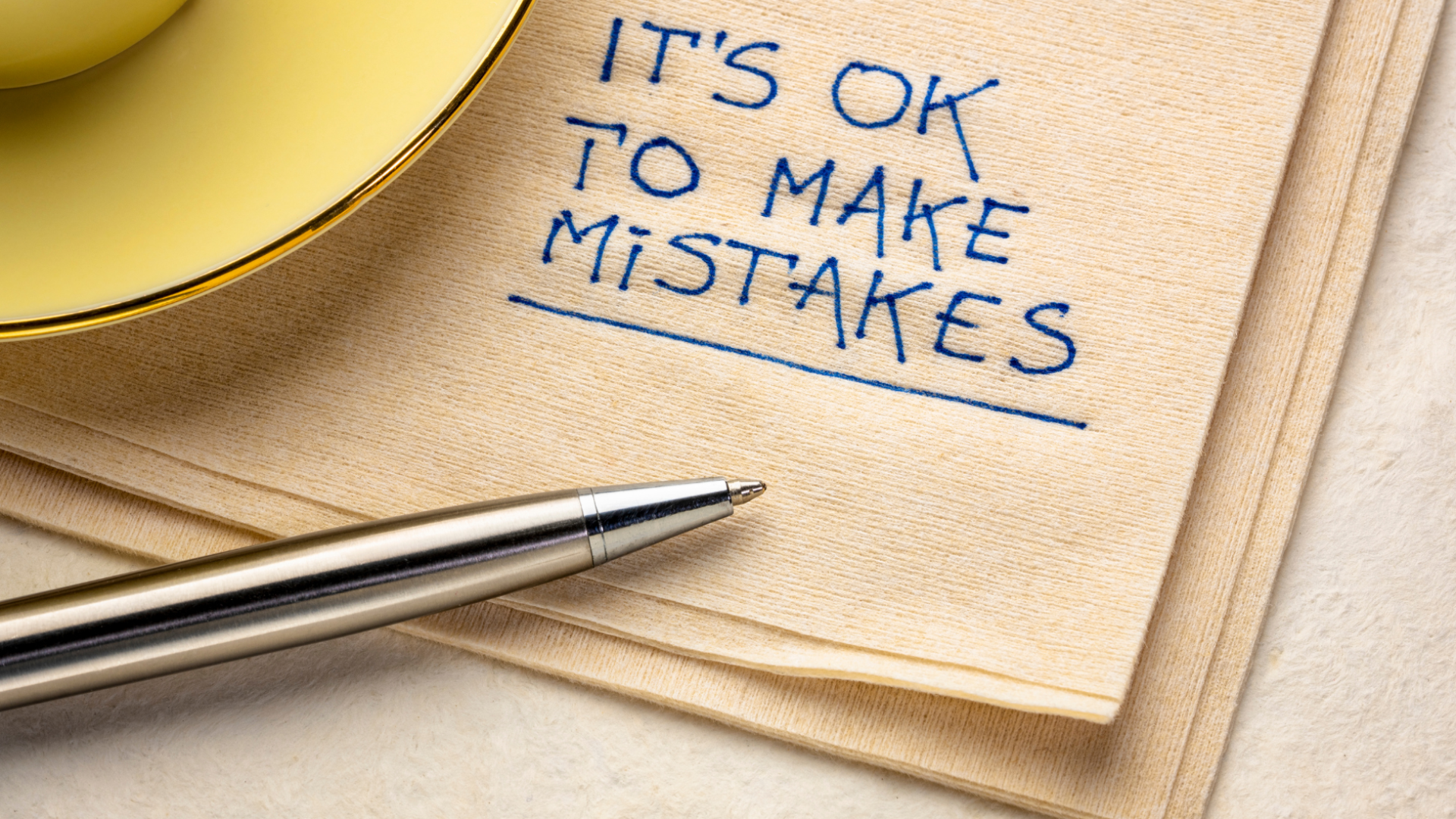
If you’re anything like most people, making mistakes as a musician isn’t your favorite thing to do. We often link mistakes with failure and feel uncomfortable or ashamed when they happen.
In addition, many of us have been culturally conditioned to celebrate success and achievement and avoid missteps. Nonetheless, allowing, embracing and learning from your blunders can become one of the greatest things you do for your flute practice (and in life too, for that matter!).
Mistakes are a part of the learning process
I remember seeing a poster with the words FAIL on it in a classroom recently. I was initially surprised, but then I read the following explanation: FAIL = first attempt in learning. I love that.
So many people immediately get discouraged by mistakes, and while it is certainly not pleasant to make them, they are an inherent part of learning anything. For some, this is a hard pill to swallow – they would prefer to fast-track their way to success and avoid bumps in the road. However, getting things wrong can teach you a whole lot if you’re open to it.
Mistakes highlight areas of improvement
Mistakes show up areas of your practice that need attention. This in turn helps you to focus specifically on them. Think about it, when you keep stumbling over that tricky part in the music, this means it needs your attention. So instead of berating yourself for getting it wrong, try to see it as a helpful indicator of what needs more work.
When you reframe your approach in this way, mistakes become one of the most valuable tools in helping you make progress.
Enhanced problem-solving skills
After identifying the problem areas your mistakes show you, you will want to problem-solve and brainstorm how to deal with those issues. Building your critical thinking skills is important, and mistakes can help kickstart these.
For example, if you get stuck on playing a scale, and always at the same part, you could try and come up with ways to troubleshoot this issue. Perhaps try isolating that part and playing it slowly, or playing it in a different rhythm.
When you start seeing mistakes as an exciting creative challenge, they become an interesting and engaging part of your practice, instead of something that discourages and frustrates you.
A deepened understanding of your flute playing
Instead of just treating our mistakes on a surface level, they can also help us cultivate a deeper understanding of our playing. In other words, they can lead us to a more thorough grasp of our flute technique and identify general patterns.
Let’s consider an example: Perhaps you tend to struggle with high notes and have difficulty getting them to sound good. When you look more closely at this, you may realize that there is a bigger issue at work with your breathing, body position, or whatever it may be.
Each mistake we make can provide a chance to analyze our technique more deeply, and perhaps fix a more fundamental issue we may be having. Of course, you may need an expert to help you identify some of these issues, but once you have a “diagnosis”, it can help fix many other issues that come up for you.
Reduced pressure
Accepting that mistakes are a natural part of the learning process alleviates the pressure to play a piece of music perfectly. When mistakes aren’t seen as shameful or undesirable, it allows you to focus on the music and simply enjoy playing, even if you do get it wrong at times.
When you fret over every note, it can cause tension (which will show up in your body and, in turn, affect your playing!) and make playing the flute a stressful experience, instead of a peaceful and joyful outlet. The wonderful irony is that when we accept mistakes, we often end up playing less of them in performances when it really counts.
Imperfection fosters community
When you’re all by yourself, without the support of a community, mistakes can loom larger than life and threaten to discourage and depress you. Sharing your mistakes with others, not only reduces their potency, it also creates a sense of camaraderie. When we normalize not getting things right all the time, and share our blunders with others, they may also feel less pressure and stress around their own errors.
And taking it even further – when we support each other with our mistakes, they can feel that much more manageable. It may even result in a matter of give and take. You help them in areas where you are strong and vice versa. In the end, nobody is perfect and we’re all growing and that’s ok.
What is your attitude towards mistakes?
Think about what happens when you make a mistake while playing your flute. What plays through your mind? Do you get frustrated or angry? Do you berate yourself and wish you could do better? Or perhaps you’re on the opposite side: You usually just gloss right over mistakes and pay no real attention to them.
If any of this sounds like you, I encourage you to start flipping the script on how you view mistakes. This isn’t going to happen overnight of course. But you can start taking some small steps towards this goal.
To get you started, here are some simple, practical questions and tools you can use when you make your next mistake (and you will!).
- Firstly, train yourself to stop the inward cringe every time you make mistakes. Try to think of them more as helpers rather than embarrassing obstacles.
- Identify the kind of mistakes you tend to make- do they have to do with tone, speed, knowing the notes, etc.? Try to categorize them.
- Brainstorm some ways you could address particular mistakes. For example, if you keep stumbling over a fast run of notes, you could slow things down and practice that particular section very deliberately until it sounds better.
- If certain mistakes reoccur, ask yourself what deeper issue they could be pointing to. If you’re not sure, ask your flute community or teacher to help you figure that out.
- Journal about your mistakes – what kinds you tend to make, how you feel about making them. Get it on paper.
Ultimately, mistakes aren’t something to fear or avoid. They’re the stepping stones that lead you toward becoming the flutist you aspire to be. So, next time you hit a wrong note, remember: you’re not failing—you’re learning. Every misstep is an opportunity to refine your skills and deepen your understanding of the flute. And best of all, each mistake brings you one step closer to your goals.
As you continue your journey, remember to be patient with yourself and enjoy the process. Mistakes are inevitable, but so is growth. Embrace them, learn from them, and keep moving forward. Your practice—and your music—will only get richer for it.
What mistake will you embrace today?
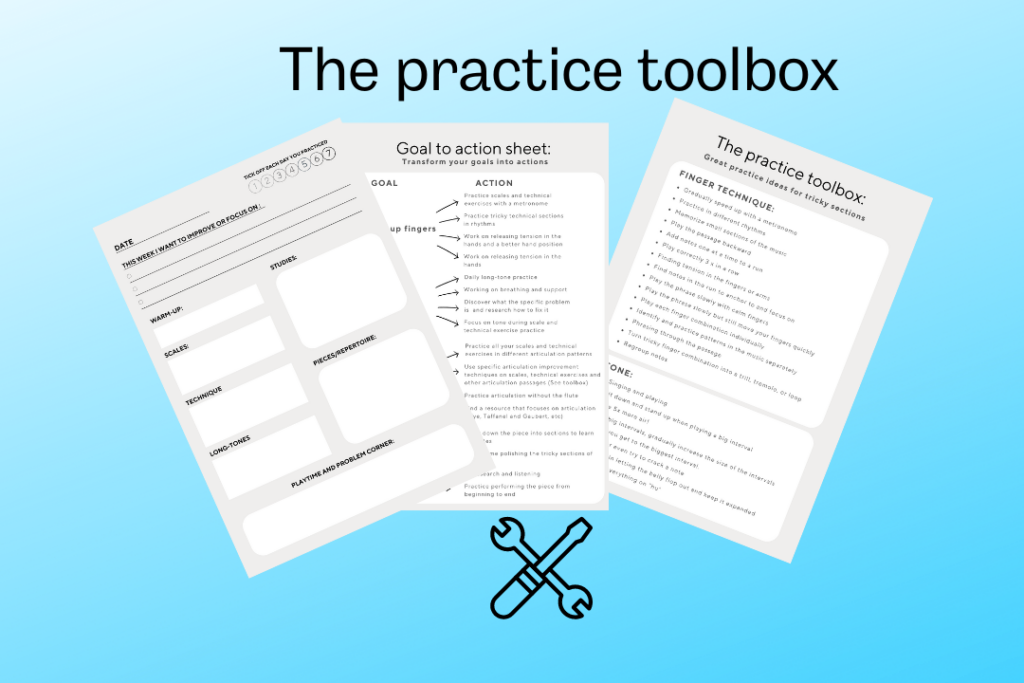
Need some ideas for solving some of your practice problems?
Access our Practice Toolbox, filled with practical ways to help overcome your practice challenges.







Responses