
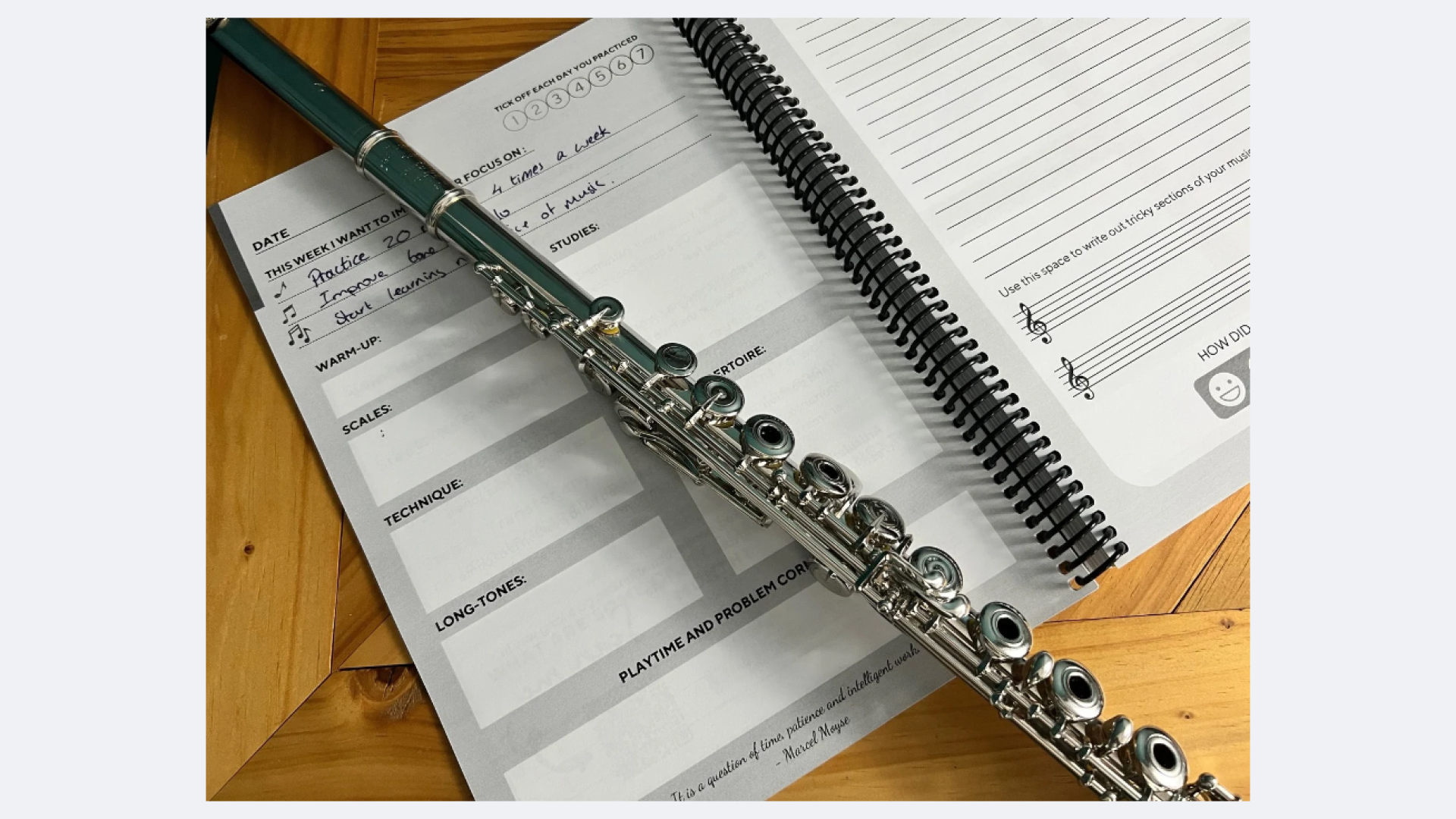
Many of us understand the advantages of having a practice plan. It’s an efficient way of reaching your flute goals and helps you stay on track and motivated. The idea of actually creating one however might be a different story altogether. Perhaps you don’t even know where to begin. It may feel overwhelming. confusing and frustrating to even think about!
But here’s the thing: once you get the hang of it, a well-thought-out practice plan can completely transform how you approach learning the flute. By making the process manageable and fun, you’ll see better results in less time.
So, let’s break this process down into five simple steps and help you design a practice plan that works for you.
1. Find the right balance
When it comes to your practice, balance is key. You need a mixture of exercises that push your technical skills balanced with pieces that keep your passion for the flute alive. Let’s break these down a bit:
- Technical exercises (scales, long tones, studies): These are like the fruit and vegetables of a healthy flute diet!😉 They form the foundation of your progress and help you develop skills like tone, articulation, and breathing. Don’t skip these!
- Pieces: Playing your favorite pieces should be the fun part of practice. They allow you to apply all your technical work and create beautiful music.
Having said this, there may be times when you focus more on one category than the other. This will depend on a few factors. For example, if you’re feeling burnt out, focus more on the second part of the practice – lean into your pieces or listen to inspiring music. Conversely, if you find yourself getting bored or stuck in a rut, focus more on the technical exercises to help sharpen your skills.
2. Structure your practice with blocks
Break your practice into manageable “blocks.” Here are the basic blocks you should include in every practice session:
- Warm-up: Start slow, with some gentle scales or a beautiful melody. This gets both your body and flute ready.
- Scales and arpeggios: The building blocks of most music. Mastering these makes everything else easier.
- Technical exercises: From finger techniques to vibrato, these exercises refine your skills and help you develop better control.
- Long tones: Often overlooked, long tones help improve your tone quality. Spend a few minutes on these, playing notes as long as you can to really focus on sound.
- Studies: These are the bridge between technical exercises and pieces. Studies are designed to focus on one specific technique, and they’ll serve as tools to improve your overall playing.
3. Set clear, achievable goals
Setting goals doesn’t have to be overwhelming. In fact, it’s one of the most powerful ways to guide your practice. Start with your long-term goals (like learning a new piece or improving your tone). Then, break them down into smaller, achievable goals for the week.
- What do you want to achieve this week? Do you want to learn a few measures of a new piece? Or maybe work on producing a cleaner tone?
- How much time do you have? If you’re short on time, focus on one or two key areas, such as working on scales or your current piece.
Remember, your goals should be specific enough that you can take clear actions. Instead of saying, “Improve my tone,” try something more specific like, “Focus on achieving a clearer, more focused tone with long tones.”
4. From goals to action
Now that you have your goals, turn them into actionable steps. For example, if your goal is to improve tone, your practice plan might look like this:
- Warm-up with long tones (5 minutes)
- Play harmonics to work on tone consistency (10 minutes)
- Practice note bending for more dynamic control (10 minutes)
Breaking your practice down into smaller actions like this helps you stay focused and on track. You’ll know exactly what to work on and can see clear progress as you go.
5. Create a flexible practice schedule
Life happens, and not every practice week will look the same. On days when you’re feeling tired or short on time, you can adjust your plan. If you have a busy week, prioritize playing pieces or enjoying some music listening time. If you’re energized and have more time, focus on the technical exercises and studies.
Here’s a sample plan for a 1-hour practice session:
- 5-minute warm-up
- 10 minutes on scales
- 10 minutes on technical exercises and long tones
- 15 minutes on studies
- 15 minutes on pieces
- 5 minutes for problem areas (something you’re struggling with)
If you only have 30 minutes, adjust it like this:
- 5 minutes on long tone warm-up
- 5 minutes on scales or technical exercises
- 5 minutes on studies
- 15 minutes on pieces
Your practice plan should be flexible and adapt to how you’re feeling and how much time you have. Over time, you’ll develop an intuitive sense of what you need to work on and how much time to dedicate to each area.
Final thoughts
The perfect practice plan doesn’t need to be complicated. By balancing your technical exercises and fun pieces, setting clear goals, and being flexible with your time, you can make your practice sessions that much more effective and enjoyable. And if you remain patient and consistent, there’ll be no stopping you! 💪
To help you even further with this, we’re about to launch an email series called 5 Days to a Purposeful Practice Plan. It’s aimed at helping you create your very own, purposeful practice plan and goes into the nitty gritty of every step you need to create one. You’ll receive 5 emails detailing how to do this, and we even throw in a PDF workbook which you can use to set up the best practice plan you’ve ever had! 🤩
Click below to sign up for the series:
Also, if you haven’t gotten hold of our practice journal yet (a very useful tool when planning your practice too!), you can get it by clicking on the link below:
Happy practicing!







Responses
I really appreciate for the guidance Tatiana
You need to know how powerful and important your encouragement is. Thank you for for your valuable time and effort.