




















As someone who loves experimenting with food, my kitchen has taught me some valuable lessons over the years. Whether I’m staring down at my burnt pancakes in frustration, or excitedly watching my family devour a delicious new dish, I’ve often found cooking to be a wise teacher. Much of what I’ve discovered can be taken into the practice room too, which is why I’d like to share my discoveries with you today.
1. Mistakes happen
Despite really enjoying being creative in the kitchen, I often don’t get my dish right the first time. Or it turns out differently than I anticipated. Or in the worst case, it’s completely inedible! (luckily that doesn’t happen all too often).
Just the other day, I spent a good hour making some tuna cups which looked amazing on the picture but ended up tasting mediocre at best. Was I disappointed? Yes, a little. However, I also tried to learn from that experience. I asked myself what went wrong, or what I could do better next time. In this particular case, I think the tuna just didn’t work so well with the other ingredients. Lesson learned.
When embraced, mistakes can be a wonderful indicator of what works and doesn’t work and show you where you stand. They’re a kind of roadmap if you will. The problem arises when we take mistakes personally or allow them to discourage us rather than teach us something.
Whether it’s in the kitchen or the practice room, mistakes work much better as roadsigns, rather than becoming roadblocks that prevent us from moving forward. Embracing them doesn’t mean that you’re a failure, it just means that you’re getting wiser and growing!
So next time you’re wondering when you’re ever going get that tricky part of the piece right, or why you still can’t play that difficult scale, remember this: Let mistakes help you and show you what to focus on, rather than discourage you from trying again.
2. Slow down
In this age of instant everything, taking the time to cook a dish that may take a little longer is surely worth the effort. While quick dishes may be easy and convenient, taking more time to cook is certainly a worthwhile endeavor. Not only do you get to spend more quality time in the kitchen, but you also get a dish in the end that will reflect the care, time and patience you took with it.
Just the other day I made a chicken dish which required some time for the sauce to reduce and thicken. Due to time constraints, however, I took it off the heat too early. Did it taste good? Yes, but it would have been so much better had I let time do its work on the sauce.
The same goes for your practice. When you really take the time to slow down and make sure you are milking your practice for everything it has to give, you will see more meaningful results. Rushing through practice or trying to jump ahead in your level is rarely a good thing. In fact, it might mean that you miss building some important skills along the way. It’s so much better to progress at a pace that’s slow and steady than to rush to get to the next level and just miss out on so much.
So, just like a good meal, that piece may need some time just to “marinate” for a while until it becomes the best it could be. Or those scales – instead of rushing through them, take the time to play them slowly and thoroughly. When your skills start solidifying as you give them the time they need, you’ll look back and be so happy you did.
3. Enjoy the process
When I was just a little girl, my mom let me mix the wildest ingredients and “practice” my cooking. She would even put my concoctions in the oven for me. Needless to say, they almost always turned out as an inedible, mushy paste, but I didn’t care! What I loved was the actual process of cooking – adding a bit of this and that, mixing and mixing again and seeing what happened. Even today, I often just enjoy the process of cooking and seeing a dish coming together as I create it.
Playing the flute is no different! Although it’s good to have goals, we don’t want to just be purely goal-driven. We want to enjoy the process. So instead of making practice something you rush through and need to check off your to-do list, take some time with it. Make it a special occasion you look forward to. I asked Tatiana for some tips on how to do that. This is what she said:
- Carve out time in your day that is special “you” time to practice.
- Focus on how practice makes you feel good so that you allow yourself to look forward to that special time
- TAKE.IT.SLOW…Seriously, just slow down and breathe a bit. The pressure is off!
- Be curious, playful and experimental so you can enjoy the process even more.
- Repeat the four steps above and watch yourself learn to love the process of practice more than the results!
Thanks, Tatiana! In short, I think taking the pressure out of practice can really elevate your enjoyment of it!
4. Add your personal flavor
I often try out new recipes. It feels great to be able to try something new, even if it’s someone else’s recipe. What’s an even greater thrill for me though, is when I’m the one mixing and matching ingredients and coming up with something amazing. Just the other day, I came up with the idea of making “faces” for my daughter using rice crackers, cucumber for the mouth, grapes for the eyes – she loved it and so did I!

For me, adding my personal flavor to something feels so satisfying and brings me a great deal of joy. Personalizing something usually also helps to feel more of a sense of ownership, thus increasing motivation.
When it comes to playing the flute, what could that look like? Well, it could mean many things. For starters, it could mean that you personalize your learning journey. Decide what kind of learning works best for you. Is it doing live lessons, working through an online program at your own pace, or perhaps joining a band? As an adult learner, you have a lot more control over this than younger flutists.
Adding a personal flavor could also relate to your practice space. Make it your own! While we’re not all interior decorators, we can certainly create a space that’s warm and welcoming and inspires us, however simple that may be.
A practice journal is another way that we can make things personal. Add notes, make note of your highs and lows, realize what you love and do more of that.
Most significantly though, allow yourself to experiment during your practice. Struggling with fingering? Why not try to come up with your own exercise to practice it? Is your tone not working? Why not try a new technique you just learned, not worrying about the outcome? Learning to approach our practice with the mindset of “What crazy things could I try out in my kitchen today” attitude is not just fun, it has some surprising results!
5. Put the magic back into boring
So the other day I was making some potatoes in the air fryer – something I have done countless times before. How could I make this boring meal more exciting? I asked myself. Then it came to me – use cookie cutters! So there I was, creating star-shaped potatoes and seeing them transform into golden-colored, beautiful, puffy delicacies before my eyes. Immediately, it upgraded the boring potatoes to a fun meal that my family really enjoyed eating.
Had I changed the ingredients? Nope. It was still the same old potato. But I had added an element of fun and creativity that made all the difference in how it was experienced.
To bring this back to your practice. Often practicing things like scales or studies doesn’t sound like the most thrilling thing to do. However, if you find a way to make it fun, it could completely transform the experience.
If you’re still not sure how scales could ever be fun, check out this short video for some inspiration!
6. Share the joy
We’ve spoken about joy and the process of cooking and flute playing, but these all have to do with us. What about beyond that?
For me sharing my cooking with others is a beautiful thing. But – just like flute playing – it can also be a source of anxiety. Are they going to like it? What if my cooking/playing is really bad? I have had those thoughts many times. One thing to remember may be that nobody is perfect, and – unless perhaps you’re a professional chef or musician – people will tend to be quite forgiving of your mistakes.
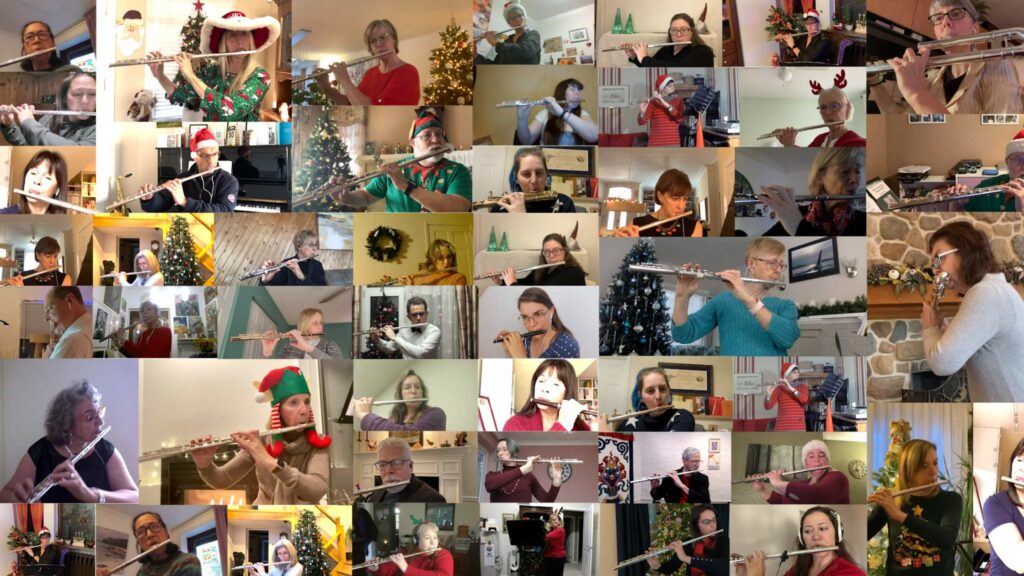
How about we change our focus here and see it as an opportunity? Sharing your music is one of the greatest things you can do with it, even if that just means playing in front of a small group of people (or even just one person for that matter!).
The other great thing about playing in front of those you trust and are comfortable with is that you can test and tweak your playing and even ask for feedback. I do this all the time at home. I ask my family: “How do you like this dish? What do you like about it? Should I make it again?”
What a privilege to be able to share our gifts with those around us. And while that can be a little scary too, it can be a great way to grow in your craft, not to mention put a smile on someone’s face!
Perhaps you’ve learned some things from your kitchen too. We’d love to hear them. Until then – Happy practicing!
Renate





Responses