








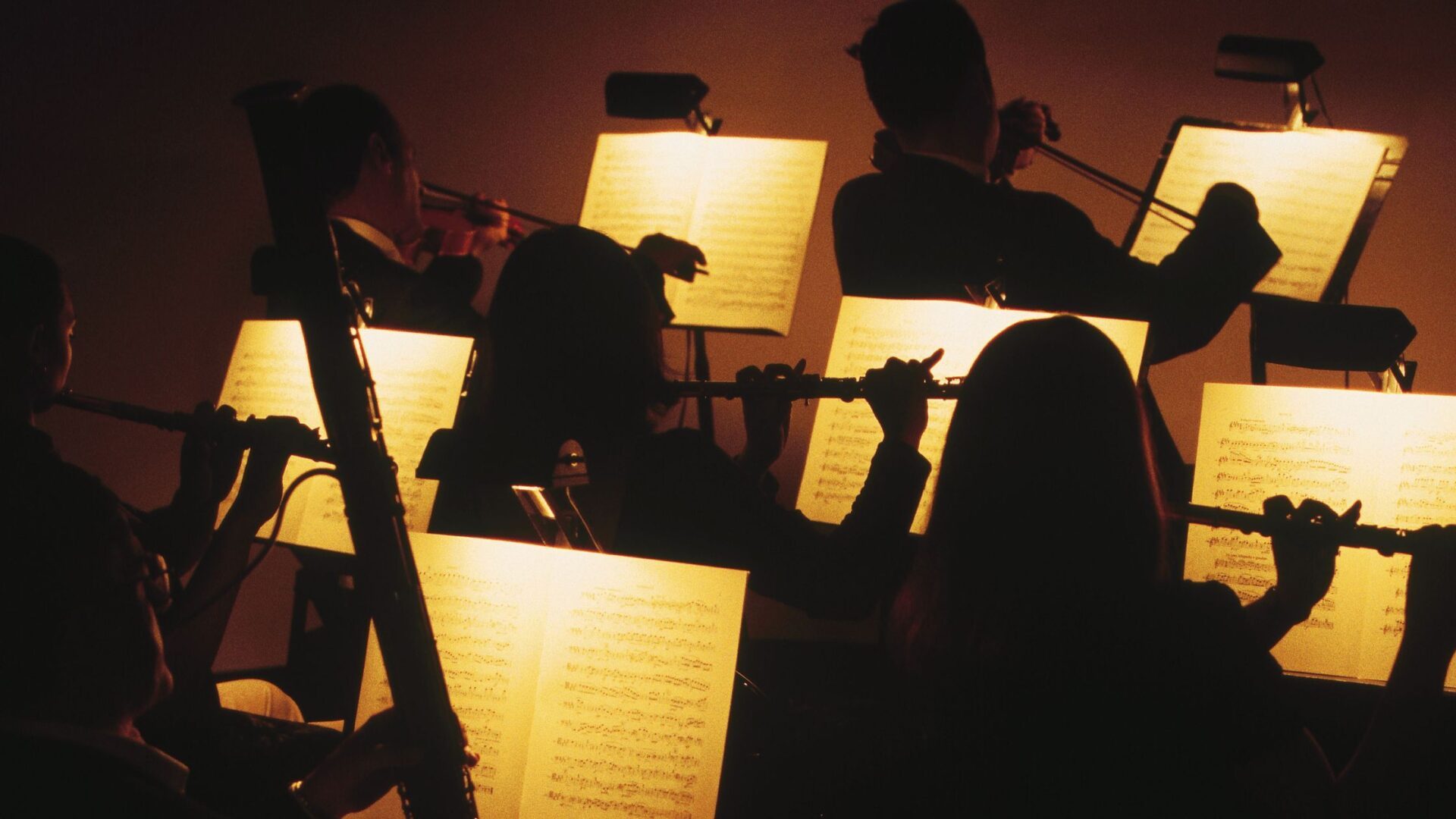
Over the past few months, I have been asked to play some really fun and exciting concerts with various orchestras. As you can imagine, this is not my full-time job. I enjoy it, of course, but it is stressful. For any of you who have played in orchestras and wind bands, you’ll know that it is such a different experience from playing solo.
If you have ever played piccolo or first flute, you will also know that everyone can hear you, almost all the time. The pressure is incredible, and after several months of doing this, I can say I have such a deep respect and admiration for my colleagues who do this full-time.
However, I do enjoy pushing myself a little out of my comfort zone. And it’s a refreshing and rewarding experience once it all comes together, despite the psychological warfare going on in my mind during these experiences.
As always, I also love finding the teachable moments in all of this, and many hours sitting in an orchestra pit for Swan Lake this past week certainly gave me a lot to think about…
Before I get into this, I want to just lay out the experience of going into a gig like this. I know many of you will be able to relate.
You get your music ahead of time (hopefully!) and you practice in preparation for that first rehearsal. Something in your mind tells you it’s all about those first impressions, right? At least as more of a ‘newbie’ to the scene, this is true. You also know that no matter how much you prepare, that first rehearsal always feels different, and there will be some surprises.
This is where the psychological warfare begins. If you allow it to, your mind will start throwing every doubt, insecurity and doomsday outcome your way. You imagine what others think, you wonder if you will get this right before the concert, and you wonder if you should be playing at all.
I recall a rehearsal a few weeks ago where I had a huge piccolo solo. The first rehearsal did NOT go well, at all. I felt so mortified. And after that experience, I could almost feel my IQ level dropping as the stress and shame increased. I will tell you in a moment how I had to catch myself.
So, let’s look at some of the lessons I have learned through these experiences.
- Rehearsals are just that….rehearsals
Forgive me for stating the obvious, but the whole point of a rehearsal is to practice for the concert. It’s not the performance, it’s not some kind of test. My teacher was the principal flute for the Vienna Volksoper for over 30 years. He always told me that he would play terribly in rehearsal. Not purposefully, but that is what ended up happening. He was ok with it, though, because he made all the mistakes in the rehearsals so that he wouldn’t repeat them in the concerts.
And that is the point of rehearsals. To work out the mistakes, to practice tricky sections and to learn. It is always amazing to hear how the whole ensemble just gets better and better from one rehearsal to the next. As that same teacher used to always say: Practicing helps. It really does.
- You WILL make mistakes
Now, just because you have made a million mistakes in your rehearsal does not mean you won’t make mistakes. I’m sorry to report that you most likely will make them. I’m sure there are musicians out there who make so few mistakes that you wouldn’t even notice. I know many more musicians who have just become masters at covering their mistakes. Very often, the mistakes are not going to be in the trickiest sections that you are most worried about. Sometimes, they happen right after, just as your brain is celebrating how well it went!
We are not machines. Some performances will go better than others. Learning to handle your mistakes is so critical. They will happen, and if you are not careful, you will become like me after my disastrous piccolo solo, so stressed that you cannot even count properly anymore. Then you go on to make even more mistakes, bigger, more serious ones, all because you could not let one moment go. You need to be okay with making mistakes, my friends. I know it’s not what you want to hear, but until you learn this lesson, the small agent of chaos called perfectionism will take over your mind and destroy everything in its path.
- Your value is NOT connected to your abilities
Your next obvious question is this: How on earth do you become okay with making mistakes if you really just don’t think that’s okay? To answer this question, let me share a bit more about my infamous piccolo solo.
Time and experience have shown me the true villain when it comes to performance. So while, yes, I did practice my solo before the next rehearsal, I realized that the real fear tearing at my mind was not how that piccolo solo would go, but rather how others would perceive me. I had pinned my value and worth as a musician and even as a person onto the success of that solo. Yes, sure, if I didn’t do a good job, I may not be hired to play again. However, in my case, that didn’t really matter. This was not my full-time job. If everyone thought I was useless and never wanted to work with me again, that would objectively not have too much of an impact on me. However, it was the thought of rejection, the worry about what others would think, how they would perceive me, what they would say to each other about me that ate away at me.
Now, there is another lesson here about how we cannot read minds (a topic for another day!), but I managed to catch myself in this situation and started actively re-programming my brain. I knew I was caught up in a war for mental calm and, if I allowed this fear to take over now, there was no going back.
So here’s what I did. I listened to Psalm 139 on repeat all the way to the rehearsal and back from it. I continued listening to it for the rest of that weekend. For me, this reminded me that I had so much more value as a person than my ability to play or my achievements. It reminded me that it didn’t matter what others thought about me because who I am is not what I do. Having something, someone, greater than myself to place my identity in has been a life-changer in so many ways; however, I know this may not be something you believe in. I want to just invite you, though, to at least take a look at what you do put your sense of value, purpose and identity in and make sure they are not things as fickle as your ability to perform at any given moment. Yikes!
- Nerves can truly be your best friend
By the end of this past week, I was exhausted. We had rehearsals every night this week until around 10 pm. We had our opening night on Friday night, two 3-hour shows on Saturday, and by the time we got to our final show on Sunday night, I could feel my brain shutting down. I was utterly exhausted.
There is a particularly nerve-racking trill near the end of Swan Lake, which is technically the end of a beautiful flute solo, but it is such an awkward and, honestly, pretty ugly trill on the flute that we get the piccolo to play it instead. It was not that difficult, but it was exposed, and I had miscounted it a few times in the rehearsal, so that made me nervous. After this, we had the final showdown at the end of the program, which is high energy and needs some strong piccolo playing.
So, by the end of the session on Sunday evening, I cannot tell you how grateful I was for my thumping heart and the rush of adrenaline to wake me up and give me that final boost. We always think of the negative effects of adrenaline. The shaking hands, dry mouth, shallow breath and so on. But how often do we consider the super-powers it gives us? More energy to our muscles, heightened awareness, sharper and more reactive thinking. It is designed to make us move and react faster. Sounds like exactly what you need when you are playing an instrument, right? It’s not your enemy; in fact, it can be an incredibly helpful tool.
- You’re always in the process, not the end result
One of the biggest errors we make is looking at any one performance as the measure of our achievement. We think of them as some sort of ‘test’, determining how far we have come. Yet, they are in and of themselves a skill that exists on a timeline. They are not a result of the process of practice; rather, they are their own kind of process.
I sometimes do this exercise with students. I draw a timeline for the year and ask them to put a dot on the line for each performance, lesson, concert, or even recording they have had in the year. Especially for students who do a lot of this, they start to get a sense that these concerts are just one of many. It can feel like such a pivotal moment, when really it is just another dot on the timeline.
This is important. Because the more we perform, the more experienced we become, the more we learn to manage those superpower nerves (yes, that is what I will now call them), and the more we learn that we can get through these experiences, despite the fear. We also learn to play more reliably under pressure. Think of it this way: your performance is a type of rehearsal for your next performance, which is a rehearsal for the one after that. And now you can circle back to point one in this post and read what I wrote about rehearsals.
So, if I had to summarize this post, here is what I would say:
You are you, no matter how many mistakes you make. You are “fearfully and wonderfully made” (Psalm 139:14) with this incredible thing called adrenaline to help you perform and exist in a timeline that is continuously moving forward. No single moment defines you, your abilities, or your future progress.
So get out there and start rehearsing those performances. You got this!



Responses
Thanks for that very interesting and sobering article. I’m going to look up Psalm 139 too. All the best for everything.
Thank you Tatiana! So difficult to make mistakes in front of others, and our self-esteem plummets! Just before a recent orchestra performance as we were tuning up, all the flutes were playing “A” individually. As I played my note, in front of the entire orchestra, for some idiotic reason the note just cracked out and was airy and unstable! Argh! As if I were just learning to play! I was mortified…. :/
So these things happen! And yes, PS 139:14 is wonderful and we do well to remember it! Thank you for sharing!!
PS On another note, even though it was NOT perfect and FULL of mistakes (!) I had recorded my Gariboldi study to post (six-week fast track), but then realized that only videos can be submitted! I had done an audio recording with my iPhone! So I can’t post it! But I haven’t seen any postings on this from anyone else, so maybe I am looking in the wrong place!
Thank you for that information, Tatiana. I will keep it in the forefront of my mind so I have some wisdom to draw from when I play in front of others.
I was recently at an orchestra rehearsal where I was the only flute ( there are normally 4 of us). I lost my place and didn’t play half of one of the pieces. Afterwards, I reminded myself that everyone else was concentrating on their own playing and not all watching me !
Thank you Tatiana! I agree with what you wrote. A performance does not define who you are or your value. I will read psalm 139 again. In terms of what performance is I also like what you said,”They are not a result of the process of practice; rather, they are their own kind of process.” We will make mistakes, it is human.
Trying – and hearing your little voice in my head. Thanks for sharing