















































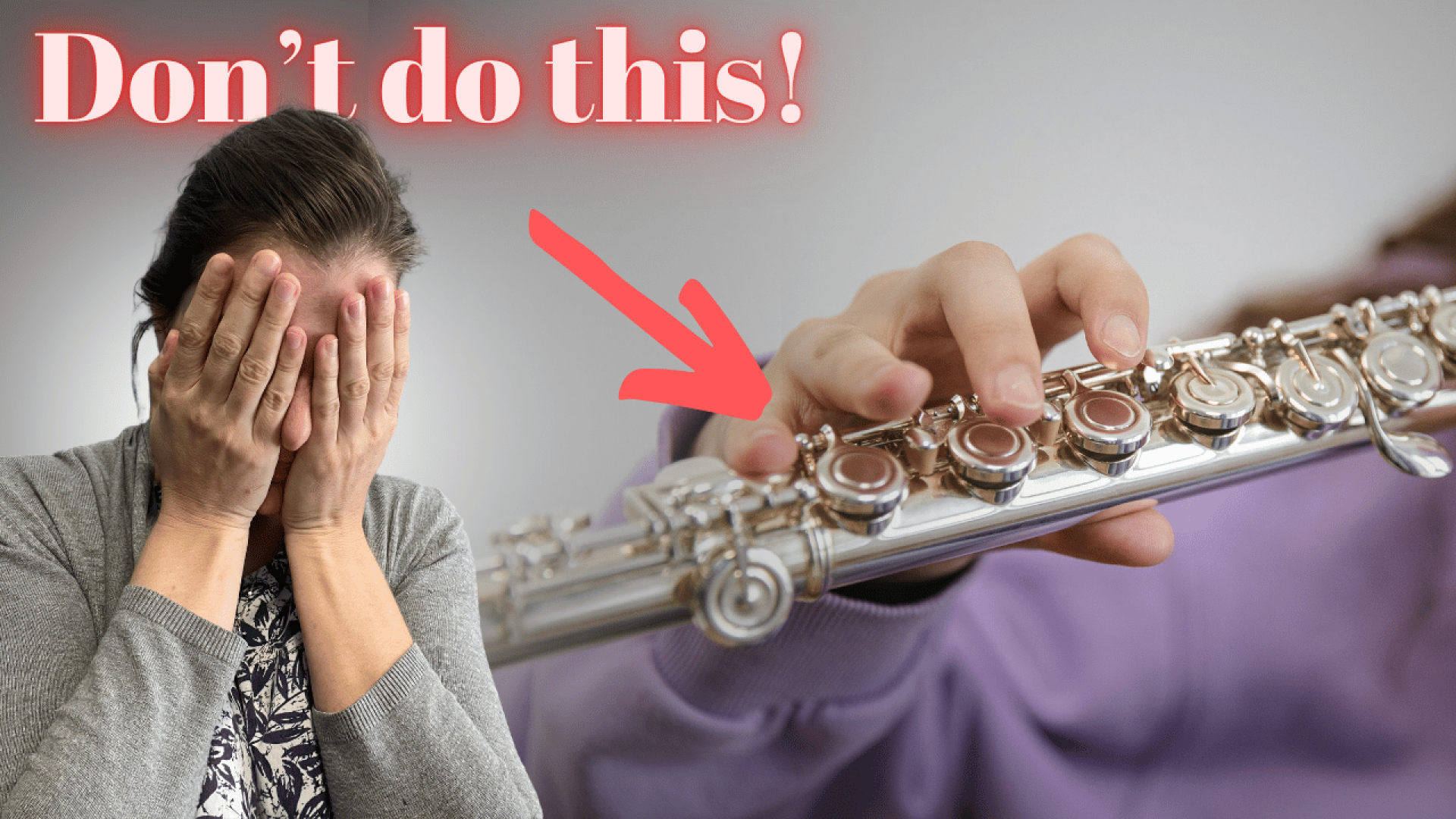
If your fingers often feel awkward, tight and slow, you may be thinking that you need to fix your fingers in some way. However, the real culprit is often a faulty hand position. In this blog post, we dig into six common hand position mistakes and how to fix them. If you prefer watching the video, you’ll find it right below this paragraph. Let’s get started!
1. Trying to hold up the flute
Many students falsely assume that they need to hold up their flute in some way. This actually couldn’t be further from the truth! While there is some holding up involved (the flute is fairly heavy after all..), it is more accurate to describe this action as the flute being “pinned in place”. So rather than holding the flute up, you are securing the flute on your chin and pinning it into place with a gentle force. You do this from the spot where your flute should be resting at the bottom side of your index finger pushing backward and a counter force from your right-hand thumb pushing forward.

The chin, index finger and right-hand thumb are the only 3 contact points with your flute that never move. So finding balance between these three contact points is a brilliant way to get a stable and reliable flute while playing (if this is still confusing to you, check out the video I made about this at the top of this post – the visual demonstration may help).
This is not a forceful action. In fact, you can pin the flute in place with surprisingly little effort. So give it a try and see if it makes a difference to how your fingers feel.
2. Right thumb position
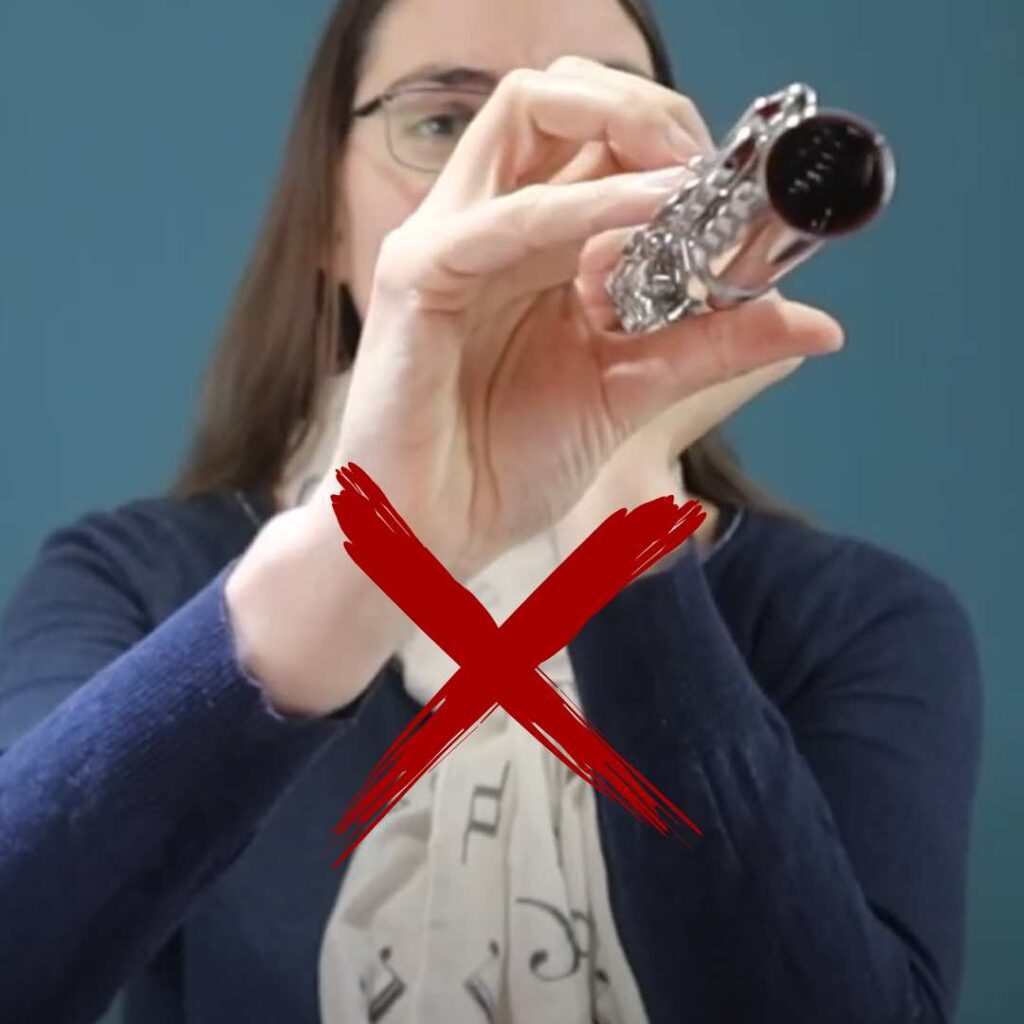
I often see the right thumb being too far forward or over to the side, or both of these things. This makes it hard to create that gentle force we discussed earlier which keeps the flute balanced. So how can we fix this and what should we be aiming for?
First, let me say that everybody’s hands are different and you need to consider your unique hand shape. Generally, though, your thumb should be underneath that first index finger, slightly behind the flute pipe for best results and to keep your flute balanced.
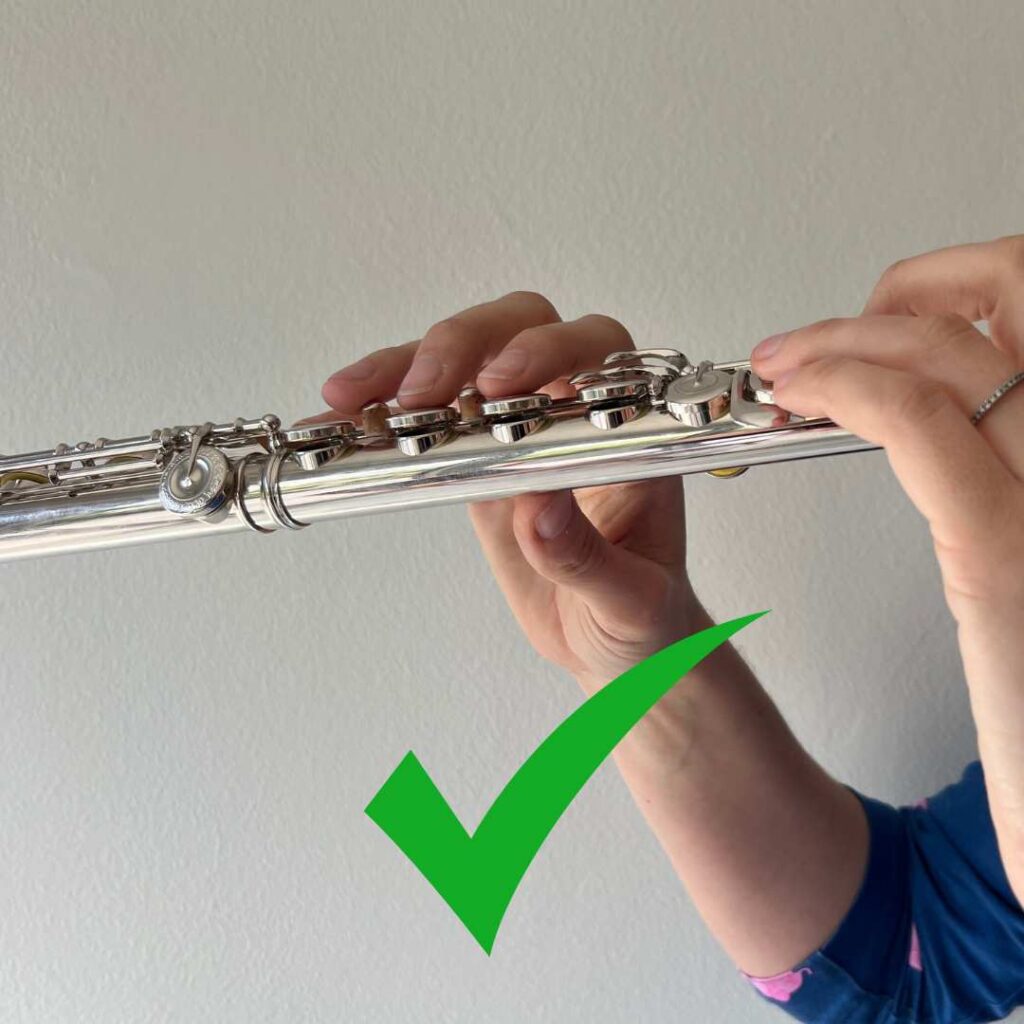
3. Locked and tight little finger
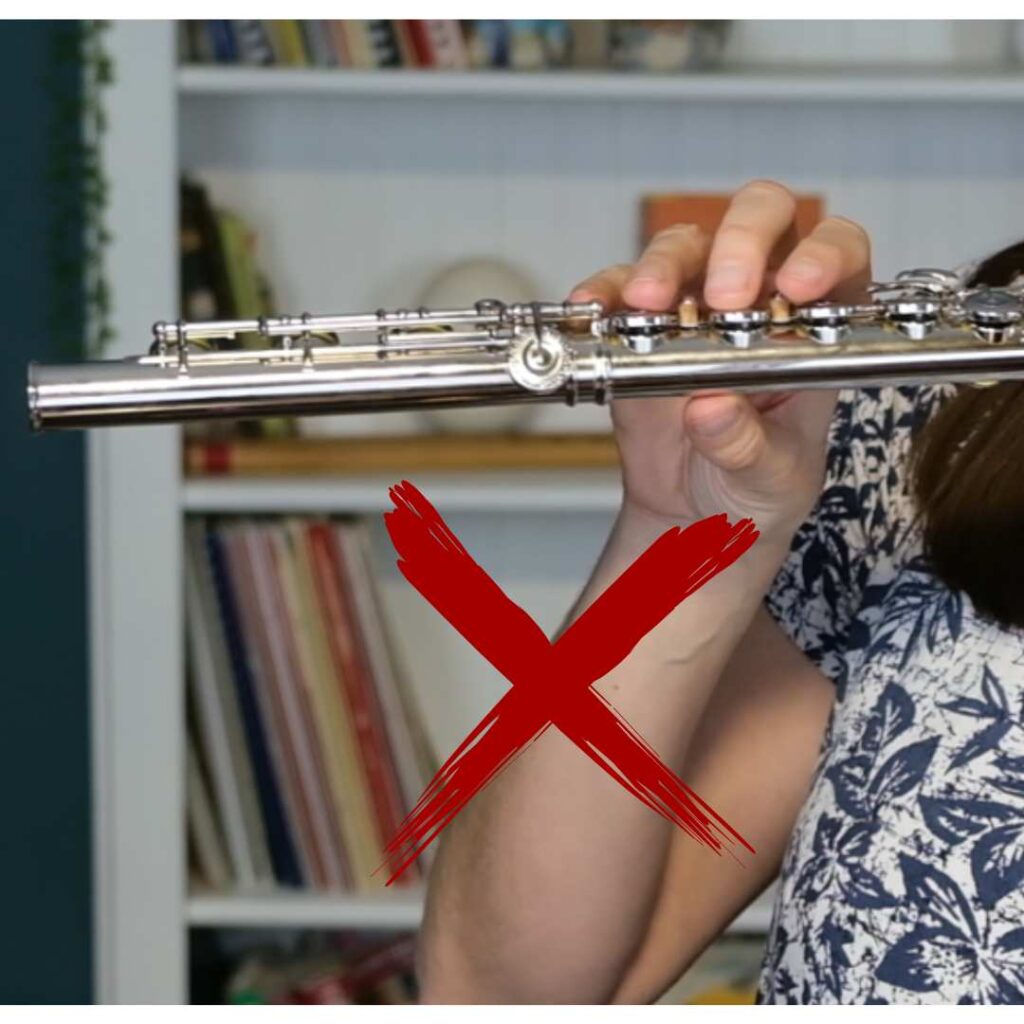
Another related problem is when you lock your little finger and it becomes tight. This has a real domino effect. The tension in the little finger creates tension in the hand which then moves to the arm which in turn will prevent your fingers from moving freely and fluidly.
So take a look at where your baby finger is on the flute and check if it can move freely or whether it’s tense, tight and locked. It should just be able to gently tap. Making sure this finger can move well can make a big difference to your playing.
4. Wrists locked and tight
Another area of the hand that can get very tight is the wrists. When you lock them so tightly that someone who tried to move them while you were playing, wouldn’t be able to, it means you’re doing something wrong.
Instead, your wrists should feel supple and loose. If someone tried to move them up and down while you were playing, they should be able to do so, although it would certainly interrupt your playing somewhat!
5. Straight, tense, or overly blocked fingers
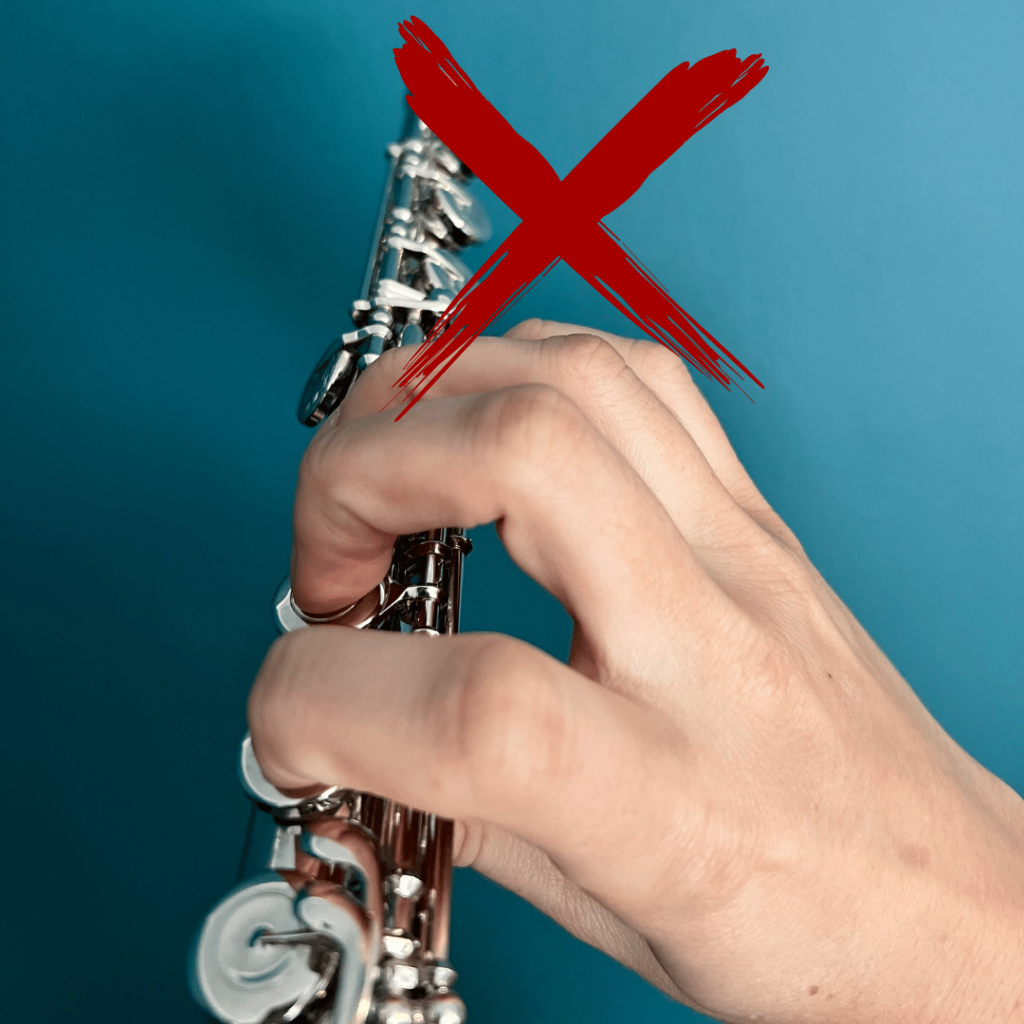
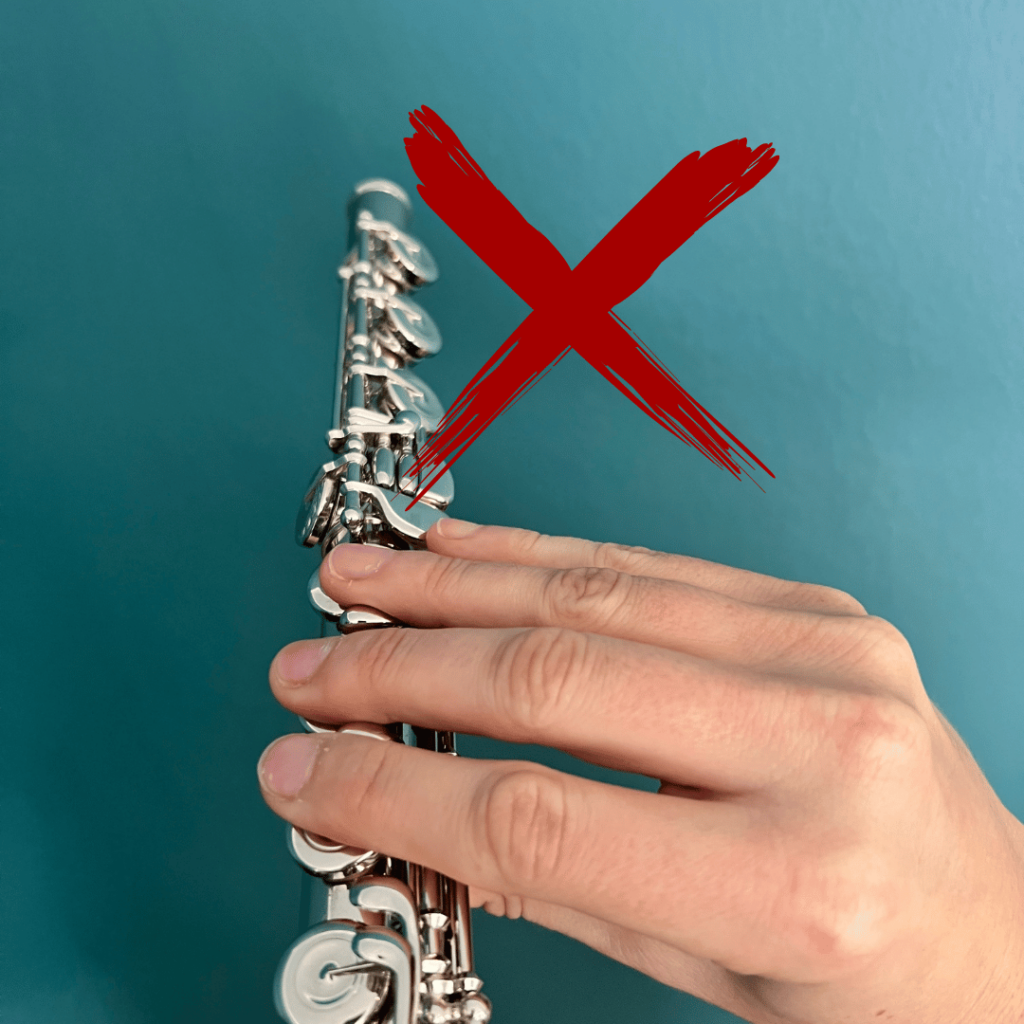
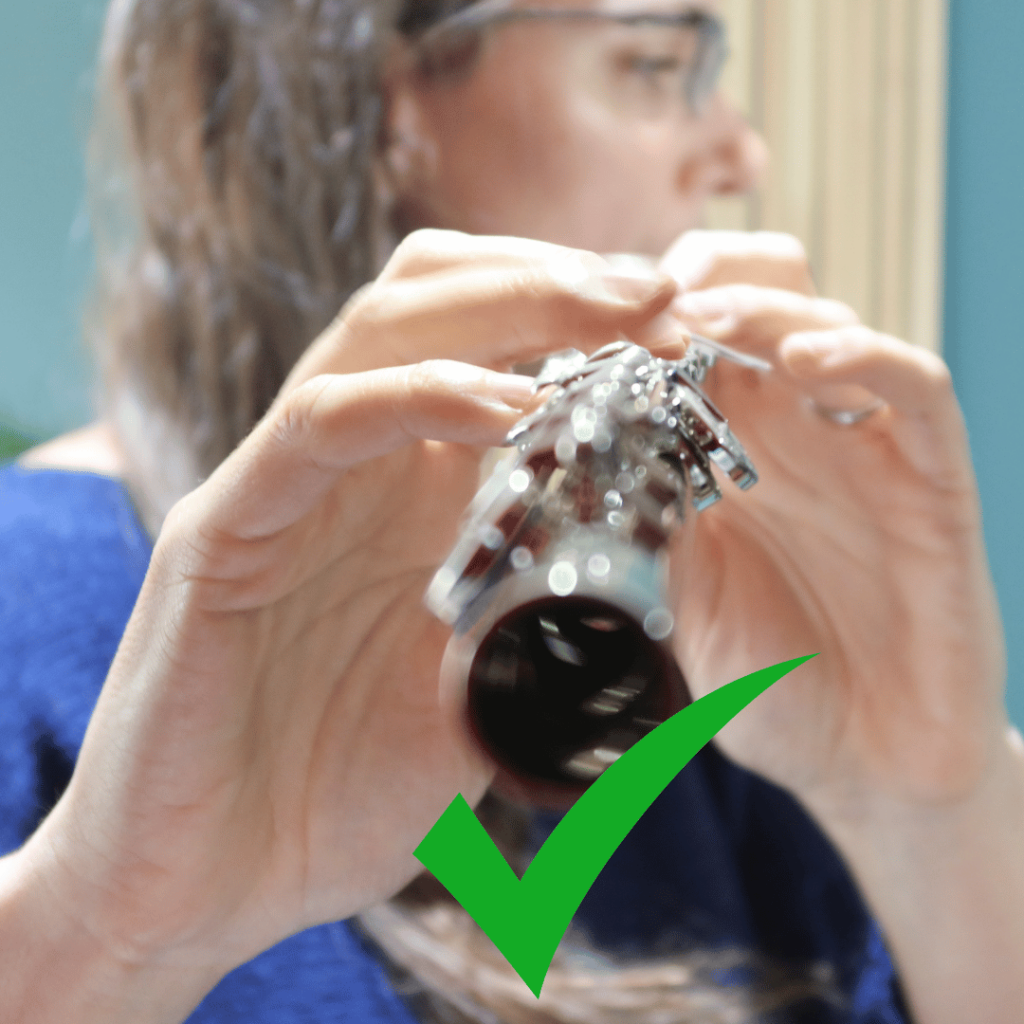
We spoke about the tight baby finger before, but the issue could extend beyond that. Perhaps you are generally struggling with really straight, locked fingers, or perhaps curling your fingers in too much. I have seen both. So how can we solve this issue?
Well, I recommend trying to find a shape for your fingers that is natural and free and that allows them to move in the best possible way. This will be slightly different for each person, depending on the shape and size of your hand.
6. Left thumb is holding the weight of the flute
I also often see students using their left thumb to try and hold the weight of their flute, or even just locking it really tightly. This will cause tension in the whole hand. Also, if this thumb is being used to balance your flute, you might have problems lifting it and renegotiating your balance, especially when you move from C to D in the second and third registers. You want the flute to be stable and not rocking around.
It all comes back to the first point I made, which is that you should not be holding the flute up with any finger at all, but rather it should be pinned in place and almost holding itself up, so to speak.
A last bonus tip…
One last tip I’d like to share with you is to look at the keys on your flute. They should be facing up towards the ceiling or slightly forward. They should not be leaning backwards – this will cause the flute to be off-balance.
So, there you have it – some simple yet powerful tips that could make all the difference to your hand position and ultimately also to your sound on the flute.
As always,
Happy practicing!
Psst…
Are you an intermediate or advanced player looking for a great method to find freer, smoother and ultimately faster fingers? Check out our Four Weeks to Faster Fingers course designed to help you develop a technique that is reliable sustainable and pain-free!
Are slow CLUMSY fingers getting you down?
Find effortless fingers and give your technique the boost it needs!






Responses
Talking about not fast enough fingers, m’y position is good, I have two flûte teachers, surely at least one of Them would have told me but I have tendancy to keep my fingers too car from the Keys. I tried playing on front of a miror as sugested by m’y teachers but I find it distractions. Any other suggestions to correct that, I am Tying to play a Vivaldi ‘s concerto.