











































Scales are not on most musicians’ list of favorite things to practice. As a result, we may include them in our practice routine grudgingly or perhaps even avoid them altogether. I get it! On the surface, scales may seem boring and useless, but they have so many benefits. (If you’d like to learn more about what these are, check out our post Why scales really DO matter here.)
I believe that students often avoid scales because they feel overwhelmed by them. They often don’t really understand how to go about working and improving them and decide instead to just give up. So, in this blog post, I’d like to show you how you can master your scales using six really practical tips. I discuss some ways to make them easier to practice and ultimately integrate them successfully into your practice routine. Ready? Let’s go!
1. Practice in small bits
The way to master anything is to take small steps towards your goal. When we apply that to a scale, you don’t even have to start by playing the full scale. Start by playing five notes and getting comfortable with those. Once you feel okay with that, play the full scale, all eight notes (also known as an octave). Then make it two octaves, and so on. As you take all those smaller steps, you’ll eventually be able to play your scale with no problems.

2. Just practice the top of the scale
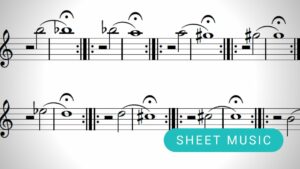
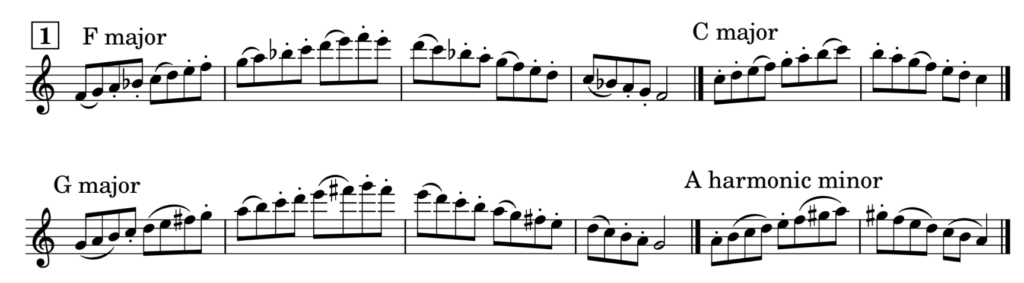
One of the best ways to ensure you’re getting your scales right is to practice just the top of the scale (see picture below) Very often, the top part of the scale is the most difficult. This is especially useful if you’re playing a minor scale or one of the more advanced, tricky scales. Honing in on those top notes and repeating them is a great way to ensure you get them right and can eventually play the scale smoothly.

3. Practice your scales in different articulations
Monotony in scale practice is dangerous. As things become routine our brains switch off and disengage with the learning process. Before we know it, we are not aware of our mistakes and are just mindlessly practicing over something. What a waste of precious time!
A way to break up the monotony of practicing scales the same way every time is to use different articulations when you play. This not only makes the scale sound more interesting, but it is also a great way to practice your articulation and keep your mind engaged in the process. So you could play the scale in different articulation patterns, use double or even triple tonguing, and voila! – the scale immediately sounds different, plus you’re giving your tongue some exercise.
4. Practice the scale in different rhythms
One of the best ways to learn your scales, practice tricky parts of the scale and improve your technique is to practice them in rhythms. You could make up your own rhythms, of course, but here are a few more ideas of what you could do. Playing them in this way helps keep your mind engaged and is an excellent way to get even, controlled fingers.

Want an extra challenge? Add a metronome to the mix and see your scales really start to do their best work for you!
5. Practice two notes of the scale at a time
Another way to iron out the kinks in your scales is to slowly make your way up by repeatedly playing two notes at a time. Let’s take F major as an example. You’ll play FG, FG, FG, GA, GA, GA and so on. This helps you to see what parts of the scale still feel a little unrefined and allows you to polish them accordingly. Plus, since you’re oscillating between two notes when you do this, you’re practicing your scales both ways – up and down. And if you’re feeling a little adventurous, why not try repeating three (or even more!) notes at a time – FGA, FGA, FGA, and so on?

6. Practice technical exercises
There are so many technical exercises out there that incorporate scales, for example, Taffanel and Gaubert and Reichert. They often hone in on one aspect of scales and incorporate them into the exercises in a fun, unique way.
This will help you learn and master the scale more quickly and develop your overall technique while you are at it.
If you want a whole lot of wonderful and fun scale exercises along with daily practice plans showing you what to practice each day, you will want to get your hands on The Flute Practice Scale Book. The book is ideal for intermediate and up players, although many of our early-intermediate players love the book too.
So, there you have it – 6 practical ways to – forgive the pun! – upscale you scale practice.
Happy practicing!
Tatiana
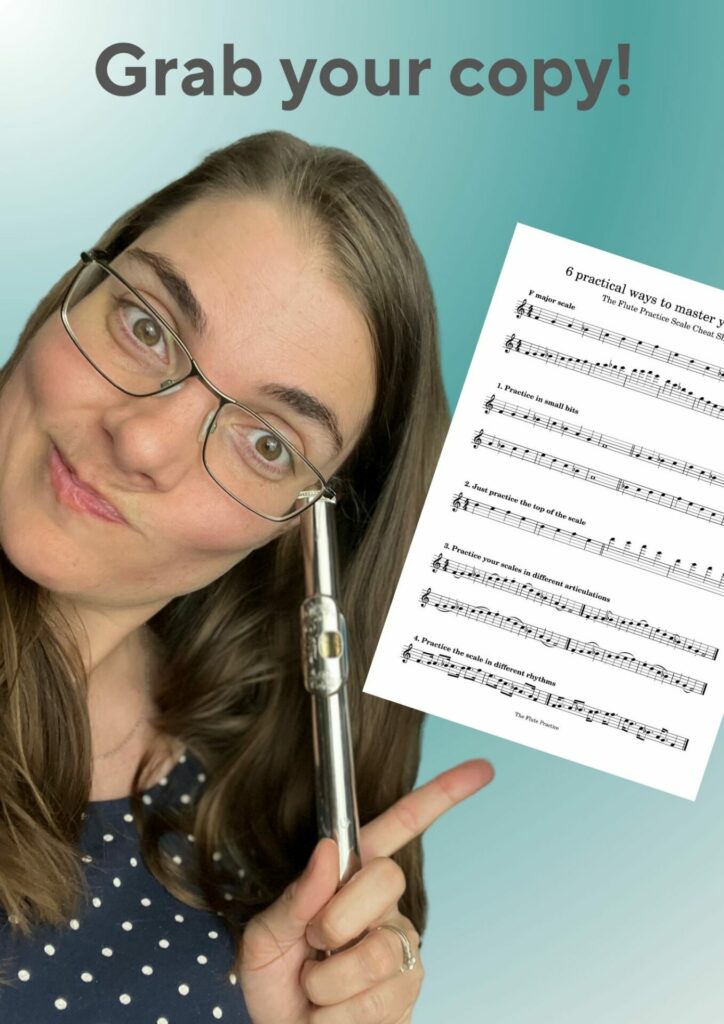
Get your hands on a handy practice resource with all these exercises conveniently written out for you!






Responses
[…] So how can you go about improving the scales that need work? You could practice them in different rhythms, in different articulations, or with a metronome. You could practice specific parts of the scale, or try to play it in just one octave until you get it right. The point is, don’t just play the scale again and hope that it will get better. Be purposeful about how you want to play and improve it. Need some more ideas on how to do that? Check out this blog post HERE. […]