One of the most common questions I get asked is: “What do I include in my daily practice?” While the answer will depend a little on your needs and goals, I do have a kind of “recipe” that I prescribe to my students. I’ve found that it really helps to keep them on track and to make progress, while also feeding their joy and love for music.
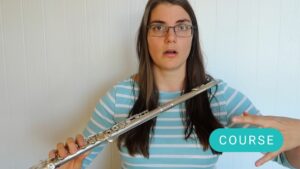
If you’d prefer to watch me explain these, I’ve created a video just for you – you will find it below this paragraph. Otherwise, just keep reading as we jump right into the seven key ingredients that make for a healthy practice routine.
1. Warm-up
I can almost guarantee that you will sound horrible when you first unpack that flute – we all do. Starting the day off with a “judgment-free session” (a time to warm up your fingers, body, breathing and embouchure) will really help to kickstart your warm-up, no matter what sound comes out of that flute!
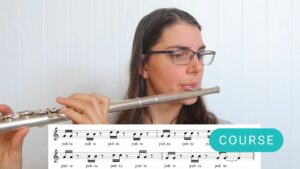
You can warm up in various ways, from scales to harmonics or even your favorite melody. For more inspiration, check out this video for some great warm-up ideas:
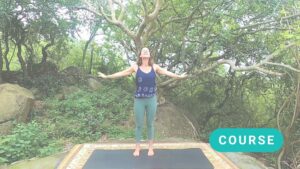
I also recommend a physical warm-up before you play. This can be some gentle movement or light stretches. Looking for a quick and easy way to warm up your body? Check out the quick 2-minute routine above.
2. Scales and arpeggios
Scales aren’t at the top of many people’s lists when it comes to favorite things to play. However, they really are essential building blocks to everything else you do on the flute – sort of like learning the letters of the alphabet before you start reading.
Not only do scales improve our ability to learn pieces and studies more quickly, they also help us to sight-read and perform better. They’re an absolutely FREE way to improve your technique in a short space of time.
Want to know more? Check out our blog post on why scales really DO really matter here.
3. Technical exercises
There are so many technical exercises out there, that you may not know where to start or which ones to choose. Here’s a little secret: Most of them do pretty much the same thing.
The outcome of the exercise will largely be determined by HOW you use them. What aspect of your playing are you trying to improve? This could be tone, finger control, phrasing or even your hand position.
A problem I’ve seen countless times is that many students choose technical exercises that are just too challenging for them. So my advice is not to aim too high. Choose something manageable for your particular flute level.
Scales are a wonderful place to start. You can also take existing technical exercises and break them down, choosing only keys that you know (for example F or G major). Another idea is to rewrite existing exercises that are written in 16th notes for example, and just make the exercise slower and easier to play.
Lastly, here are my top technical areas to work on:
For less advanced players: tone, breathing, finger work and articulation (single tonguing and different articulation patterns).
For more advanced players: all of the above but start adding vibrato, dynamics, double and triple tonguing, trills and ornaments.
4. Long tones
Though tones are also part of technique practice, they are so vitally important that they deserve their own mention!
Long tones help develop tone-related techniques such as intervals, dynamics, vibrato, tone colors, breathing and breath control and embouchure control and flexibility.
So how do you practice these? Just pick up the flute and play a long tone – job done! However, if you’re looking for some more creative ways to practice these, check out this video:
5. Studies or etudes
You may be wondering – what on earth is a study or etude? Great question! Well, think of these as midway points between technical exercises and pieces or repertoire. They are pieces of solo flute music that focus on a few specific challenges.
Studies or etudes form a wonderful bridge between practicing monotonous technical exercises and diving right into a piece that usually contains a complex mixture of technical and musical challenges. As for the name – well, sometimes they are referred to as studies and other times etudes. The terms can be used interchangeably.
I personally love studies. They help you to grow and develop as a musician and are so effective at doing that. Along with many music teachers around the world, I recommend playing one study a week. Yes, that means a new study every week! Before you get too stressed out though, I have found that less advanced players or very busy people (aren’t we all!) manage better when they aim to play one study every two weeks. Find a routine that works for you and stick to it!
Start by choosing studies that are a little easier for you to play. Finding level-appropriate studies can be difficult, but they are out there. We’re also working on creating some wonderful collections of these for you to practice!
So how do studies benefit your playing?
Well, doing weekly studies is a great way to boost your note-learning skills, improve your sight-reading abilities, and challenge yourself with new tricky technical aspects every week.
Studies can reveal weaknesses in our playing – I have often referred to them as a “doctor”, helping to diagnose and often cure our problems. I LOVE studies – did I mention that?
6. Pieces or repertoire
Pieces and repertoire need little introduction. This is the music that brings you joy and a sense of fulfillment – the fun stuff!
Some of you might be wondering why you can’t just dive into this section right away. Well, think of the other five steps as a way of preparing you for this one. Going through the other steps that are perhaps a little less exciting will help prepare you to play a piece. And when you finally reach this step, you’ll be able to express yourself and just have fun.
7. Playtime corner
Often, as we go through our practice routine, the little problems that crop up as we practice aren’t given enough dedicated attention. It is for this reason that I’ve added one last ingredient to your practice recipe called “play time corner”.
This is a small space you create that is dedicated to problem-solving. You are taking some time just to work on your technical issues, but doing so in a fun, relaxed way. The playtime corner is for experimenting and polishing up anything that has come up during your practice, for example, issues with tone or a tricky passage.
So, there you have it – my 7-ingredient recipe to maximize your practice progress.
Happy practicing!


















Responses
[…] It also really takes the pressure off when you don’t need to rack your brains on what to practice every time. Even better, have a system or long-term plan that you simply slot into when you practice. Our recent blog post on what to include in your practice routine might also be a helpful read. Check it out here. […]
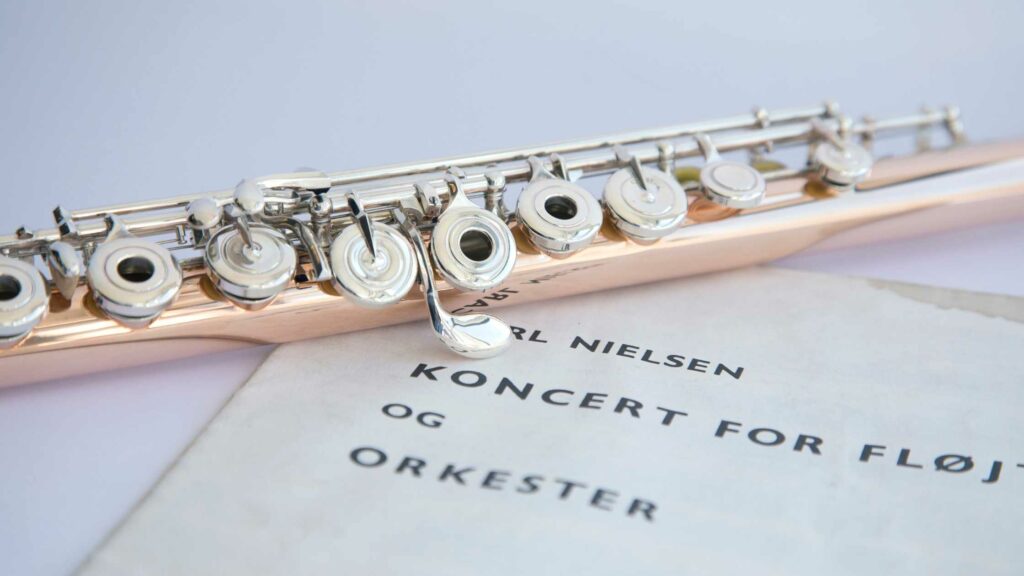
Thank you for the helpful suggestions! I also like the picture with the flute and Danish note album of Carl Nielsen, I have the music for Tågen Letter (The Fog is lifting). I am going to practice it one day.